?unique=d68bd7a)
Reaching climate neutrality will depend not only on technology, but also on people. To make he energy transition a reality, we need a workforce with the right skills to design, install, operate and maintain sustainable energy systems. This is where Vocational Education and Training (VET) is key.
However, VET systems must evolve faster to keep pace with the transformation already underway. Several priorities stand out:
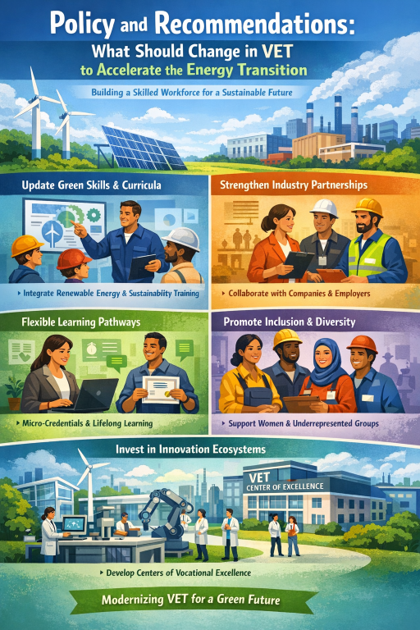
Update curricula to reflect emerging green occupations
Many programmes still focus on traditional industrial skills without fully integrating renewable energy, energy efficiency or the digital tools used in modern infrastructure.
Strengthen collaboration with industry
Companies in renewable energy, smart buildings and sustainable manufacturing continue to report skills shortages. Stronger partnerships between training providers and companies are essential to align learning with real labor market needs.
Promote flexible learning pathways
Micro-credentials, short courses and modular training can help workers to reskill and upskill throughout their careers, especially in fast-changing sectors such as energy management and industrial automation.
Make green skills more inclusive
Encouraging women and underrepresented groups to enter technical and green careers is not only a matter of equity but it is also key to addressing the growing talent gap in VET and sustainable industries.
Invest in innovation ecosystems
Collaborative environments such as Centres of Vocational Excellence (CoVEs) can connect VET providers, companies and research institutions to co-develop new curricula, technologies and teaching methods.
Accelerating the energy transition requires coordinated action across education, industry and policy. By modernising VET and aligning it with sustainability goals, Europe can build the talent base needed to lead the green transformation. These are the key topics and ideas in which SECOVE project is working on.