?unique=d68bd7a)
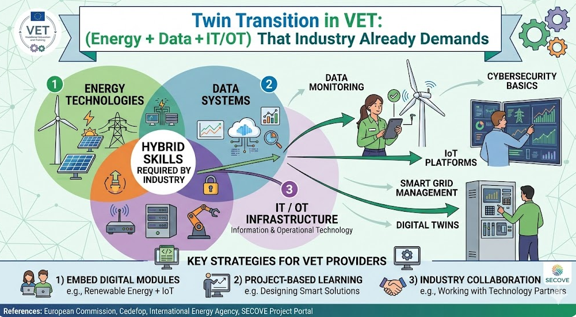
The transition to a sustainable economy is not only green, it is also Digital. This twin transition combines decarbonisation with rapid digitalisation across energy systems, manufacturing and smart buildings and it is already reshaping the skills companies expect from technical professionals.
Today, industry is increasingly looking for people who can work at the intersection of energy technologies, data systems and digital infrastructure. This means that traditional roles such as electricians, building technicians and maintenance specialists are evolving. More and more of these professionals need capabilities or at least certain knowledge in areas such as:
· Data monitoring
· Cybersecurity fundamentals
· Cloud-based control systems
· IoT and sensors
· Digital twins
· IT/OT integration
For VET providers, the challenge is clear: how to adapt training programs so that future technicians are prepared not only to install renewable technologies, but also to manage the digital infrastructure that makes them efficient, resilient and secure. Some examples to address this can be:
- Embedding digital modules into energy-related curricula
- Combining renewable energy training with IoT-based monitoring
- Integrating cybersecurity fundamentals into smart building programmes
- Promoting project-based learning linked to real industry needs
- Strengthening collaboration with companies, technology providers and education
Initiatives such as SECOVE show how important it is to connect VET institutions with industry and regional innovation hubs to ensure training remains aligned with labour market demands. Preparing technicians for the twin transition means going beyond traditional disciplinary boundaries. The workforce of the future will not only deploy renewable technologies — it will also manage the digital systems that make them work smarter.